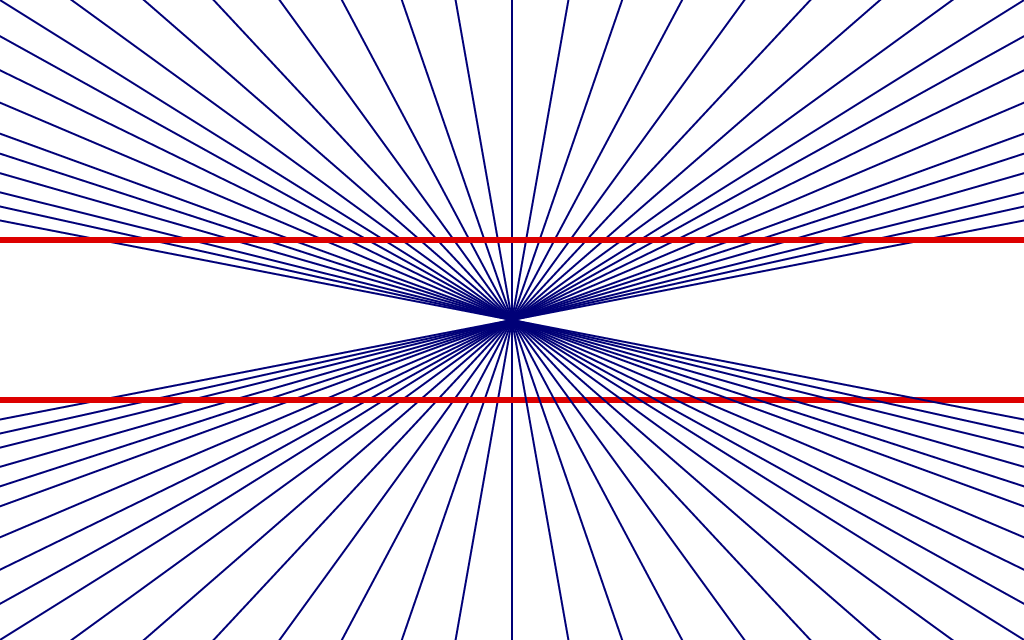
One optical illusion per day. You see it. You commit to what you think is true. Then the truth snaps into view.
Sometimes you were wrong. Sometimes you weren't. Not every illusion in Unseeing is actually an illusion... some days your eyes are telling the truth and the game is testing whether you've learned to doubt them.
Get three right in a row and the game starts playing you.
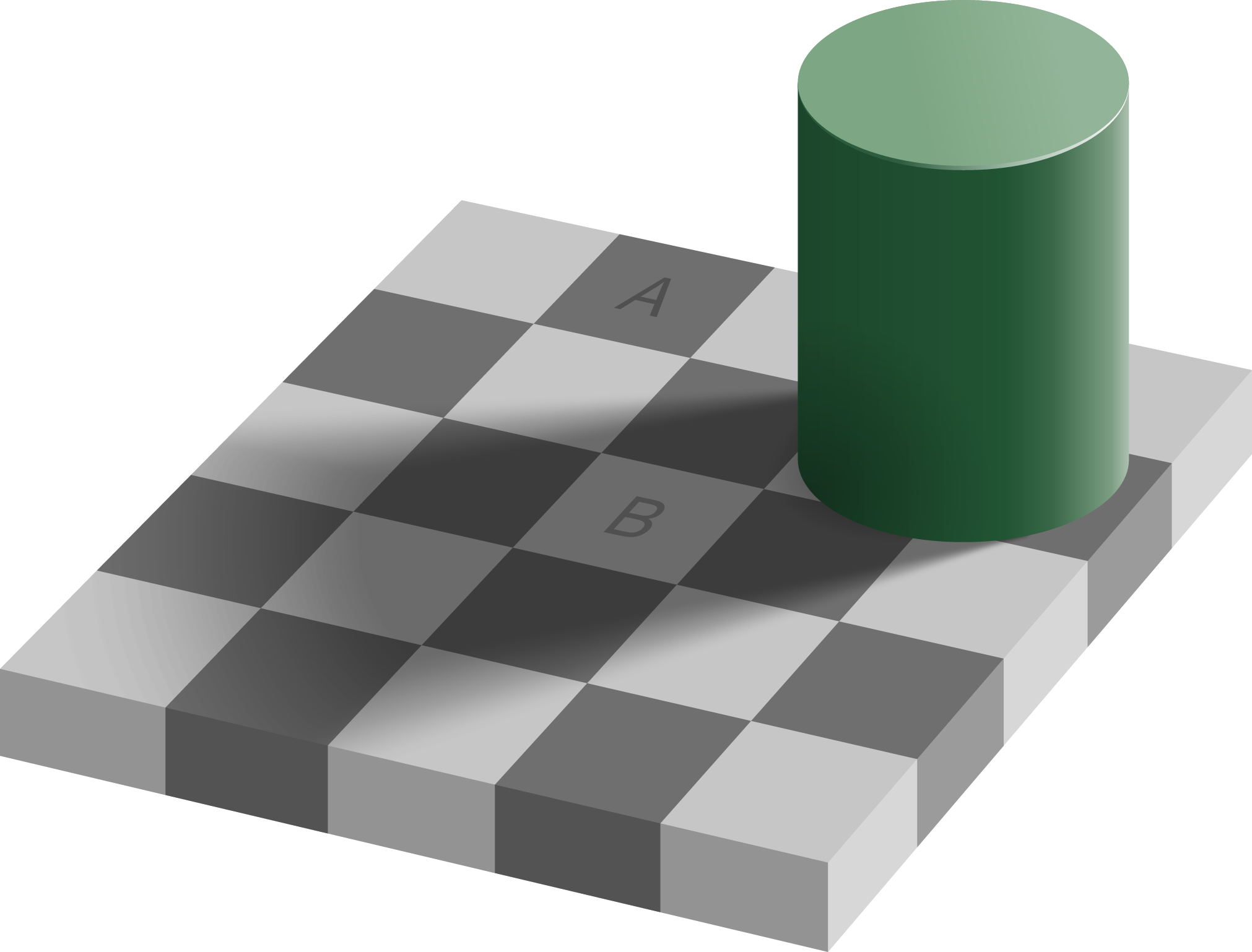
Squares A and B are the exact same shade of gray. Your visual system discounts the shadow automatically, "correcting" brightness that doesn't need correcting. You were never seeing the image. You were seeing your brain's guess about the image.
Edward Adelson, 1995
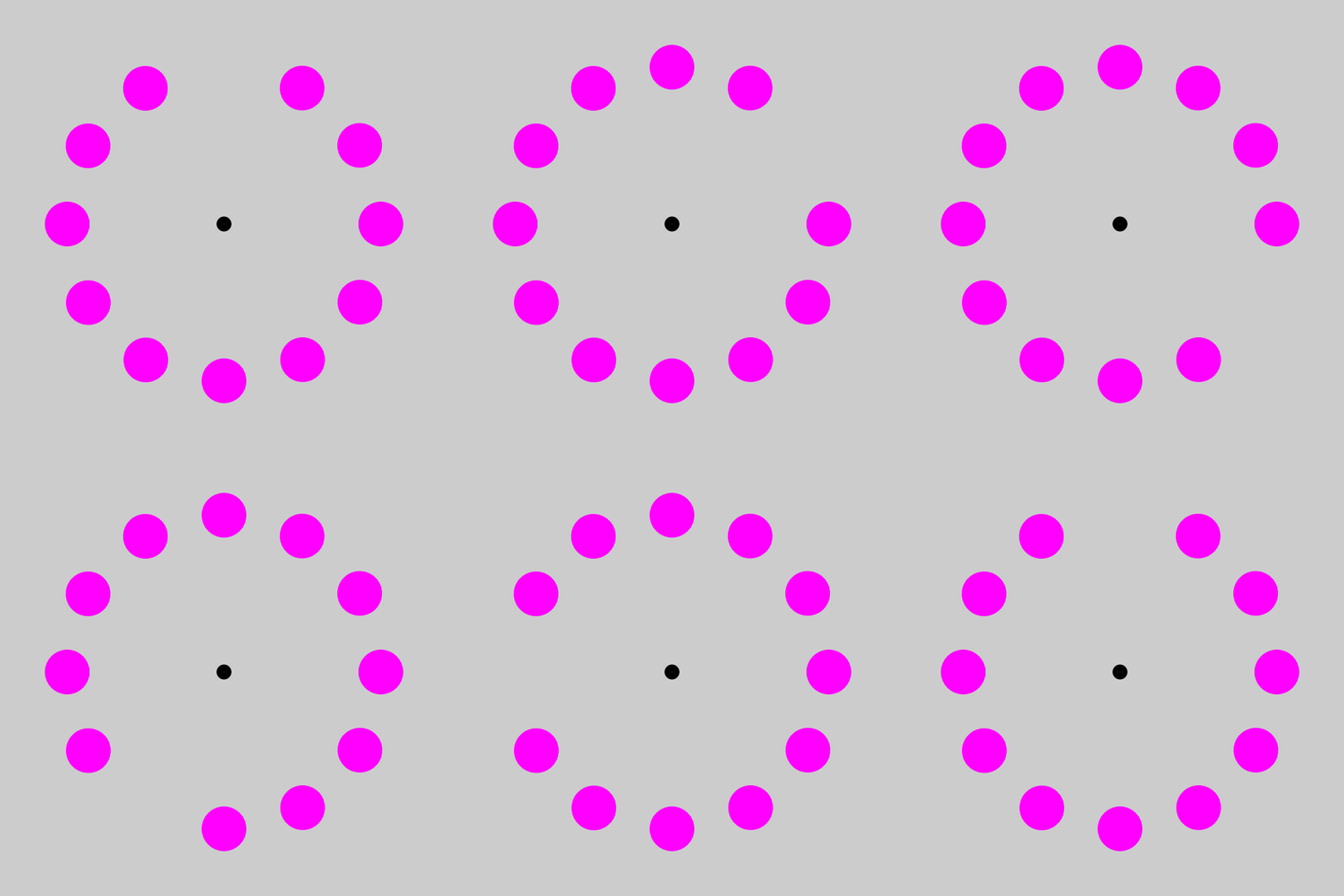
After a few seconds, a green dot appears to rotate around the circle. Keep staring. The pink dots start to vanish entirely. Neither the green dot nor the disappearance is real. Your fatigued photoreceptors create the green afterimage, and your brain erases the pink dots because they're not changing relative to your fixation point. Your visual system deletes anything it considers old news.
Jeremy Hinton, 2005
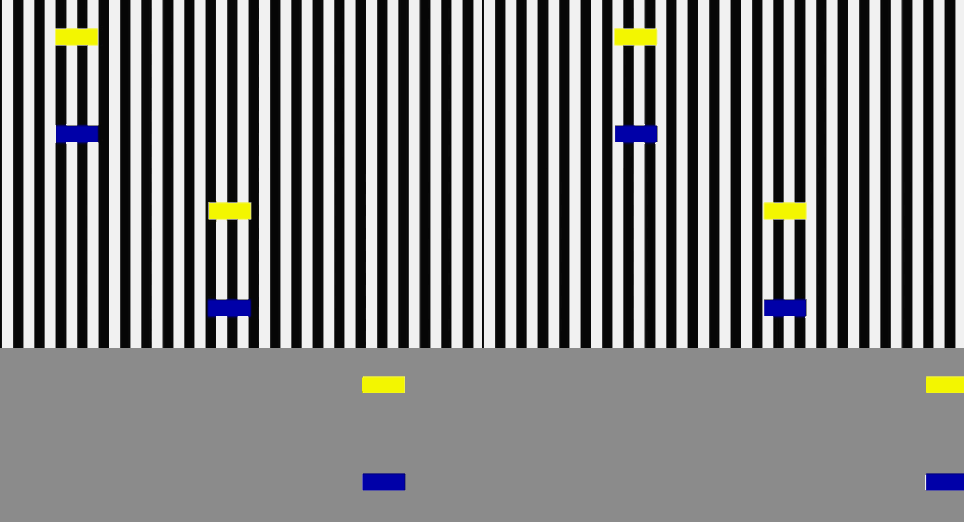
Both bars move at exactly the same constant speed. The black-and-white stripes modulate your brain's speed perception based on contrast. Remove the stripes and the truth is obvious. Add them back and the lie returns instantly.
Stuart Anstis, 2001
The illusion appears. Full screen. No hints. Your brain commits to what it sees before you can stop it.
Answer the question. Your response is recorded. "You said A is darker." There's no taking it back.
Interact with the image. Swipe. Tap. Freeze. The illusion collapses. The truth snaps into view.
A brief explanation of which perceptual mechanism fooled you, who discovered it, and why your brain will do it again tomorrow.
Share the unsolved illusion. They have to download the app to break it. The lie spreads. The truth requires effort.
Every illusion in Unseeing exploits a specific, documented mechanism of human perception. The Checker Shadow Illusion (Adelson, 1995) breaks your lightness constancy. The Extinction Illusion (Ninio, 2000) overwhelms your peripheral vision. The Ebbinghaus Illusion (1902) hijacks your size-distance scaling.
After each reveal, a brief explanation tells you which part of your visual system failed and why. This is real science, not party tricks. The app draws from over a century of perceptual research, from Helmholtz's "unconscious inference" to modern Bayesian models of visual prediction.
These aren't tricks. They're features of your visual system working exactly as designed... just not as you expected.
Unseeing belongs to a category of experience that doesn't have a name yet. It's not productivity. It's not entertainment. It's not self-improvement. It's closer to what happens when you stare at something long enough to realize you were never really seeing it in the first place.
Built by Ultra-Normal LLC. We make contemplative games... apps that occupy the space between productivity tools and entertainment. Not useful, not mindless. Something else.
No ads. No account. No data collection. No subscription. Just your brain vs. reality.
If Unseeing hooked you, the science behind it goes much further. These are the books that shaped the app... and that will permanently change how you understand what you see.
The case that everything you see is a construction, not a recording. Hoffman argues your visual system is optimized for survival, not truth.
The classic. Gregory spent a career showing that perception is hypothesis-testing. This is where the field began for most people.
The definitive reference. 500+ illusions with full scientific commentary. Not light reading. Worth every page.
Two neuroscientists study magicians to understand how the brain is fooled. Where stage magic meets visual science.
The creators of the famous gorilla experiment explain how our intuitions about attention, memory, and perception are systematically wrong.
Pure visual pleasure. Hundreds of illusions, beautifully reproduced. The coffee table book for anyone who fell for Unseeing.
How artists exploit the same perceptual mechanisms that power optical illusions. Connects seeing to making in ways that change both.
The textbook. If you want to understand WHY these illusions work at the neural level, Palmer is the deep end of the pool.
One illusion per day. Free. No ads. No tracking.
Download on the App Store